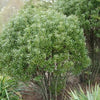
Shamrock Inkberry Holly (Ilex glabra ‘Shamrock’) is an attractive native broadleaf evergreen shrub prized for its glossy dark green foliage, compact rounded growth habit, and excellent adaptability to moist landscape conditions. Its dense branching and naturally tidy appearance make it an excellent choice for foundation plantings, low evergreen hedges, mixed shrub borders, and traditional estate-style landscapes.
In spring, Shamrock produces a fresh flush of bright, glossy green foliage that contrasts beautifully with its darker mature leaves. Small greenish-white flowers appear in late spring, providing nectar for bees and other beneficial pollinators. Although the flowers are relatively inconspicuous, they contribute to the shrub's ecological value.
Shamrock is a female cultivar of Inkberry Holly. When a compatible male Inkberry Holly is planted nearby, small glossy black berries may develop in late summer and fall. These ornamental fruits can persist into winter and provide a seasonal food source for birds and other wildlife.
Throughout the year, Shamrock maintains a naturally rounded, compact growth habit with attractive evergreen foliage. Compared with the straight species of Inkberry Holly, it grows more slowly, remains smaller, and produces fewer root suckers. Its dense appearance and ability to tolerate pruning make it particularly useful for informal hedges and organized landscape plantings.
As a cultivar of a species native to eastern North America, Shamrock Inkberry Holly is especially valuable for native-inspired gardens, woodland borders, rain gardens, and wetland-edge plantings. Its tolerance of acidic, consistently moist soil makes it a dependable choice for areas where many traditional evergreen shrubs may struggle.
More About Shamrock Inkberry Holly
-
Native-Species Broadleaf Evergreen Shrub
-
Compact, Rounded Growth Habit
-
Glossy Dark Green Foliage
-
Bright Green Spring Growth
-
Excellent Year-Round Evergreen Interest
-
Small Greenish-White Spring Flowers
-
Pollinator Friendly
-
Attracts Bees and Beneficial Insects
-
Female Cultivar
-
Black Berries with Compatible Male Pollinator
-
Provides Food and Shelter for Birds
-
Generally Deer Resistant
-
Moist and Wet Soil Tolerant
-
Excellent for Acidic Soil
-
Slower Growing Than Many Other Inkberry Varieties
-
Reduced Suckering Compared with the Species
-
Low Maintenance Once Established
-
Excellent Low Evergreen Hedge
-
Foundation Planting, Mass Planting, Rain Garden, Mixed Shrub Border
-
Outstanding Four-Season Interest
Height: 3–4 Feet
Spread: 3–4 Feet
Hardiness Zone: 4–9
Characteristics
-
Sun Exposure: Full Sun to Partial Shade
-
Season of Interest: Spring, Summer, Fall, Winter
-
Soil Moisture: Average to Wet; Prefers Consistently Moist Soil
-
Attributes: Native-Species Cultivar, Broadleaf Evergreen, Compact, Wet Soil Tolerant, Pollinator Friendly, Wildlife Friendly
-
Foliage Color: Glossy Dark Green with Bright Green New Growth
-
Flower Color: Greenish-White
-
Berry Color: Black, When Pollinated
-
Flower Fragrance: Not Significant
Care & Maintenance Tips
Planting:
Plant in full sun to partial shade in acidic, organically rich soil. Shamrock Inkberry Holly performs best in consistently moist conditions but also adapts to average garden soils with adequate watering.
Avoid alkaline soils, which can cause yellowing foliage and reduced plant vigor.
For low evergreen hedges, space plants approximately 2.5–3 feet apart, depending on the desired density. Allow adequate room for mature growth and good air circulation.
Watering:
Water regularly during the first growing season to establish a strong root system. Shamrock prefers consistently moist soil, particularly during hot summer weather.
Once established, it tolerates occasional dry periods but should receive supplemental watering during prolonged droughts.
Fertilizing:
Apply a balanced slow-release fertilizer formulated for acid-loving evergreens in early spring if needed. Organic mulch can help conserve moisture and improve soil conditions.
Avoid excessive fertilization and unnecessary lime applications.
Pruning:
Shamrock naturally develops a compact, rounded growth habit and generally requires minimal pruning.
If shaping is necessary, prune in late winter or early spring before new growth begins. Light selective pruning can encourage denser branching and maintain an attractive appearance.
Older plants may develop a more open growth habit or sparse lower foliage. Occasional renewal pruning can help maintain fullness.
Winter Care:
Shamrock retains its foliage throughout winter, providing valuable year-round structure. In exposed locations, winter winds and frozen soil may occasionally cause foliage discoloration or winter burn.
Apply a layer of organic mulch around the root zone to conserve moisture and moderate soil temperatures, keeping mulch away from the main stems.
Pest Prevention:
Monitor periodically for spider mites, inkberry leaf miners, scale insects, and occasional leaf spot. Maintain acidic soil conditions, adequate moisture, and good air circulation to support healthy growth.
Pollination Requirements:
Shamrock is a female cultivar and requires a compatible male Inkberry Holly for reliable berry production. Without a suitable male pollinator nearby, plants may flower but generally will not produce black berries.