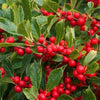
Red Sprite Winterberry Holly (Ilex verticillata ‘Red Sprite’) is a beautiful compact deciduous shrub prized for its brilliant red winter berries, naturally rounded growth habit, and exceptional seasonal interest. This dwarf selection of native Winterberry Holly produces an abundance of large, bright red berries that decorate its bare branches throughout fall and winter, creating a spectacular display when much of the landscape has gone dormant.
In late spring to early summer, Red Sprite produces small greenish-white flowers along its branches. Although relatively inconspicuous, these flowers provide nectar and pollen for bees and other beneficial pollinators. When pollinated by a compatible male Winterberry Holly, the flowers develop into clusters of vibrant red berries that mature in autumn.
As temperatures cool, Red Sprite's green foliage gradually turns yellow before dropping in fall. Once the leaves have fallen, the brilliant red berries become the focal point of the shrub, creating outstanding contrast against snow, evergreen foliage, and winter landscapes. The berries often persist into winter and provide an important seasonal food source for birds.
Red Sprite naturally develops a dense, rounded growth habit that remains significantly smaller than many traditional Winterberry Holly varieties. Its compact size makes it an excellent choice for foundation plantings, mixed shrub borders, mass plantings, and smaller residential landscapes.
As a cultivar of a species native to eastern North America, Red Sprite is especially valuable for native gardens, rain gardens, woodland edges, and wetland plantings. Its excellent tolerance of moist and periodically saturated soil makes it a dependable choice for locations where many traditional ornamental shrubs struggle.
More About Red Sprite Winterberry Holly
-
Native-Species Deciduous Shrub
-
Compact, Rounded Growth Habit
-
Brilliant Red Fall and Winter Berries
-
Large, Showy Berry Clusters
-
Excellent Winter Interest
-
Green Summer Foliage
-
Yellow Fall Foliage
-
Small Greenish-White Spring Flowers
-
Pollinator Friendly
-
Attracts Bees and Beneficial Insects
-
Female Cultivar
-
Requires a Compatible Male Pollinator for Berries
-
Provides Winter Food for Birds
-
Excellent Wet Soil Tolerance
-
Suitable for Rain Gardens and Wetland Edges
-
Prefers Acidic Soil
-
Cold Hardy
-
Low Maintenance Once Established
-
Excellent for Mass Plantings
-
Foundation Planting, Specimen, Mixed Shrub Border, Native Garden
-
Outstanding Fall and Winter Interest
Height: 3–5 Feet
Spread: 3–5 Feet
Hardiness Zone: 3–9
Characteristics
-
Sun Exposure: Full Sun to Partial Shade
-
Season of Interest: Fall, Winter
-
Soil Moisture: Average to Wet; Tolerates Seasonally Saturated Soil
-
Attributes: Native-Species Cultivar, Deciduous, Winter Berries, Wetland Tolerant, Pollinator Friendly, Bird Friendly
-
Foliage Color: Green; Yellow in Fall
-
Flower Color: Greenish-White
-
Berry Color: Bright Red
-
Flower Fragrance: Not Significant
Care & Maintenance Tips
Planting:
Plant in full sun to partial shade in acidic, moisture-retentive soil. Red Sprite performs particularly well in consistently moist locations, including rain gardens, low-lying landscape areas, and wetland edges.
Although adaptable to average garden soils, consistent moisture is beneficial for healthy growth and reliable berry production.
For mass plantings or informal hedges, space plants approximately 3–5 feet apart, depending on the desired density and available growing space.
Watering:
Water regularly during the first growing season to establish a strong root system. Red Sprite prefers consistently moist soil and tolerates periods of seasonal saturation.
Once established, it generally requires little supplemental watering in naturally moist locations. Plants growing in drier soils should receive additional water during extended periods without rainfall.
Fertilizing:
Apply a balanced slow-release fertilizer formulated for acid-loving shrubs in early spring if needed. Incorporating compost or organic matter can help improve soil structure and moisture retention.
Avoid excessive fertilization and unnecessary lime applications, as Winterberry Holly prefers acidic soil.
Pruning:
Red Sprite naturally develops a compact, rounded shape and generally requires minimal pruning.
If shaping is necessary, prune in late winter or early spring before new growth begins. Keep in mind that pruning at this time will remove some of the branches that would otherwise produce flowers and berries.
Avoid excessive shearing, which can reduce berry production and diminish the shrub's naturally attractive form.
Winter Care:
Red Sprite is exceptionally cold hardy and naturally loses its foliage each fall. Its bright red berries provide outstanding winter interest and may persist for several months, depending on weather conditions and bird activity.
Established plants generally require little winter protection.
Pest Prevention:
Monitor periodically for leaf spot, scale insects, and other common holly pests. Maintain adequate soil moisture and good air circulation to support healthy growth.
Pollination Requirements:
Red Sprite is a female cultivar and requires a compatible male Winterberry Holly for reliable berry production. Jim Dandy Winterberry Holly is a commonly recommended pollinator because its flowering period overlaps with Red Sprite.
Plant a compatible male nearby, ideally within approximately 50 feet, to encourage dependable pollination. One healthy male plant can generally pollinate several female Winterberry Hollies.