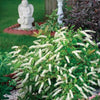
Little Henry® Virginia Sweetspire (Itea virginica ‘Sprich’) is a beautiful compact deciduous flowering shrub prized for its fragrant white flowers, graceful arching branches, and spectacular fall foliage. This improved selection of native Virginia Sweetspire offers outstanding seasonal interest in a smaller, more manageable form, making it an excellent choice for foundation plantings, mixed shrub borders, rain gardens, and woodland landscapes.
In late spring to early summer, Little Henry® produces an abundance of slender, fragrant white flower clusters that extend gracefully from the ends of its branches. These delicate, slightly arching blooms resemble miniature white fireworks, creating an elegant display above the shrub's rich green foliage. The lightly sweet fragrance attracts bees, butterflies, and other beneficial pollinators.
Throughout summer, Little Henry® maintains an attractive, low-growing, mounded habit with glossy green foliage. Its naturally compact size makes it particularly useful along walkways, beneath windows, at the front of mixed borders, and in mass plantings. Unlike many flowering shrubs that require abundant sunlight, Little Henry® also performs well in partial shade and can tolerate full shade, although flowering is typically more abundant with some direct sunlight.
As autumn approaches, Little Henry® delivers one of its most impressive ornamental features. Its green foliage transforms into brilliant shades of orange, scarlet red, burgundy, and deep purple, creating a spectacular display that can rival traditional fall-color shrubs. The colorful foliage may remain attractive late into the season, providing exceptional contrast against evergreen plants and ornamental grasses.
As a cultivar of a species native to eastern North America, Little Henry® is especially valuable in naturalistic landscapes, woodland gardens, and environmentally conscious plantings. Its adaptability to wet soils, seasonal saturation, and occasional dry conditions makes it an exceptionally versatile shrub for residential and commercial landscapes.
Whether planted individually, grouped along a foundation, or massed along a slope or rain garden, Little Henry® Virginia Sweetspire offers an outstanding combination of fragrant flowers, brilliant fall color, and low-maintenance beauty.
More About Little Henry® Virginia Sweetspire
-
Native-Species Deciduous Flowering Shrub
-
Compact, Low-Mounded Growth Habit
-
Fragrant White Late Spring to Early Summer Flowers
-
Graceful Arching Flower Clusters
-
Glossy Green Summer Foliage
-
Brilliant Red, Orange, Burgundy, and Purple Fall Color
-
Excellent Multi-Season Interest
-
Attracts Bees and Butterflies
-
Pollinator Friendly
-
Generally Deer Resistant, Not Deer-Proof
-
Excellent Wet Soil Tolerance
-
Suitable for Rain Gardens and Wetland Edges
-
Tolerates Heavy Clay Soil
-
Tolerates Full Shade
-
Drought Tolerant Once Established
-
Adaptable to a Range of Soil pH Conditions
-
Excellent for Mass Plantings
-
Suitable for Erosion Control on Slopes
-
Attractive Foundation Planting
-
Excellent Woodland Border Shrub
-
Low Maintenance Once Established
-
May Spread Gradually Through Root Suckers
-
Excellent Alternative to Larger Virginia Sweetspire Varieties
Height: 2–3 Feet
Spread: 2–3 Feet
Hardiness Zone: 5–9
Characteristics
-
Sun Exposure: Full Sun to Full Shade
-
Season of Interest: Spring, Summer, Fall
-
Soil Moisture: Average to Wet; Tolerates Periodically Saturated Soil
-
Attributes: Native-Species Cultivar, Deciduous, Compact, Fragrant Flowers, Pollinator Friendly, Wetland Tolerant, Deer Resistant, Fall Color
-
Foliage Color: Green in Summer; Red, Orange, Burgundy, and Purple in Fall
-
Flower Color: White
-
Flower Fragrance: Lightly Sweet and Fragrant
-
Bloom Time: Late Spring to Early Summer
-
Growth Habit: Compact, Mounded, Gently Arching
-
Growth Rate: Moderate
Care & Maintenance Tips
Planting:
Plant in full sun to full shade in moist, organically rich soil. Little Henry® prefers consistently moist conditions but adapts to a wide range of soil types, including heavier clay soils and periodically wet locations.
For the most abundant flowers and strongest fall color, choose a location receiving at least several hours of sunlight daily.
For mass plantings or low borders, space plants approximately 2–3 feet apart, depending on the desired density.
Watering:
Water regularly during the first growing season to establish a healthy root system. Little Henry® performs particularly well in consistently moist soil and tolerates occasional seasonal saturation.
Once established, it can withstand some dry conditions, although supplemental watering during prolonged droughts helps maintain healthy foliage and vigorous growth.
Fertilizing:
Little Henry® generally requires little fertilizer when planted in reasonably fertile soil.
If needed, apply a balanced slow-release fertilizer formulated for flowering shrubs in early spring. Organic mulch can help conserve moisture, improve soil conditions, and reduce competition from weeds.
Pruning:
Little Henry® naturally develops an attractive compact, mounded shape and generally requires minimal pruning.
Because it flowers on old wood, perform any necessary shaping immediately after flowering in early summer.
Avoid heavy pruning in late fall or early spring, as this may remove flower buds and reduce the following season's bloom display.
Remove dead, damaged, or crossing branches as needed. Occasional root suckers can be removed to prevent unwanted spreading.
Winter Care:
Little Henry® is hardy in USDA zones 5–9 and naturally loses its leaves during winter.
Established plants generally require little winter protection. In colder locations, some stem dieback may occur, but healthy plants often recover with new spring growth.
Maintain a layer of organic mulch around the root zone, keeping mulch away from the main stems.
Pest Prevention:
Little Henry® is generally a durable, low-maintenance shrub with relatively few serious pest or disease problems.
Maintain adequate moisture during establishment and monitor periodically for leaf spots, occasional insect damage, or signs of environmental stress.
Good air circulation and appropriate watering practices help maintain healthy growth.
Pollination Requirements:
Little Henry® does not require a separate pollinator to produce its ornamental white flowers. The flowers provide nectar and pollen for visiting insects.
Wildlife Benefits:
The fragrant flowers attract bees, butterflies, and other pollinators. Its dense branching also provides shelter for small wildlife, making it a valuable addition to native-inspired gardens and pollinator-friendly landscapes.